Ken's Second Act
Cesar Chavez returned a phone call; his iconic image now smashed

It wasn’t me who said
There’ll be a price to pay
And I won’t feel bad at all
When the hero takes a fall
Hero Takes a Fall by the Bangles, released in 1984
The late Cesar Chavez, co-founder of the United Farm Workers, had a dark side. He was a sexual predator, raping his co-founder and sexually molesting underage girls, according to Investigative reporting that the New York Times published this past week.
Those revelations and subsequent reporting by other news organizations disheartened me because I, like millions of other Americans, admired a man who had become a transformative figure. He was a charismatic leader who fought for better working conditions for farmworkers who toiled for low pay and without shade from the sweltering sun. UFW-led strikes and boycotts prevailed and gained Chavez and the union national recognition.
However, I feel for the victims as well. They came forward at least a decade after the MeToo movement began to topple powerful men in the entertainment industry, corporate America, the media and politics. Chavez exploited their reverence toward him. One victim was so traumatized that she tried to commit suicide several times by age 15, the New York Times reported.
I learned about Chavez’s advocacy for farmworkers around the same time I followed the Vietnam War and the Watergate scandal. “Viva la raza. Viva la causa,” his followers chanted. Two decades later I was working at a small daily in El Centro, Calif., in 1993 when the city editor forwarded a credit bureau report saying the California Agricultural Relations Board had ruled in favor of the UFW in a dispute with a local grower. The board fined the grower, but I forget the amount. The city editor wanted me to get a comment from the UFW, so I called information to get the number of union headquarters in the Tehachapi mountains east of Bakersfield.
I didn’t expect the return call to come from Chavez. He was fiery and sounded like an old warrior. I asked him who would get the settlement money. The farmworkers, he said. We spoke for only a few minutes, and I recall few specifics of the conversation. It could take me hours – even a day -- to try to find the clip of the story in volumes of three-ring binders that I store in boxes in my condo.
That was the first and only time I spoke to Chavez. He died a few months later at age 66 after a hunger strike. My colleague/roommate in El Centro rode a bus to Delano to cover Chavez’s funeral procession. To complement the story, I got a comment from a state agricultural official at a dinner I covered; he said Chavez was an adversary whom he respected.
The UFW was active in the Coachella Valley east of Palm Springs, where I attended high school in the 1970s. I recall one classmate in student government, the daughter of growers who sued Penthouse magazine and Chavez for libel for an article in 1975 in which he accused them of union busting. I mentioned the libel suit to my editors while working for a twice-weekly newspaper in Blythe, California, four decades ago because the classmate’s mother was elected to the Riverside County Board of Supervisors.
Regrettably, I mentioned the libel suit when I saw the classmate at my alma mater’s 50th-year reunion in 2023. I was trying to make conversation with a classmate whom I barely knew. However, I had been retired for three years from journalism and should have kept my reporter hat off. She gave me her business card, and I emailed an apology to her for bringing up what could have been a sore subject.
Two years ago, I drove on State Route 58 enroute to visit a former roommate in Tulare. I hadn’t been on that road since 2013 and noticed a freeway exit sign for the Cesar E. Chavez National Monument. I took the exit on my return trip to visit a national monument that then-President Barack Obama established in 2014. The national monument includes a visitor center with photographs and other exhibits telling Chavez’s story. A creek runs through the compound, named La Paz, and includes housing quarters and a walkway through a garden. School buses from Bakersfield took high school students on a field trip to the monument. I asked students to snap photos of me.
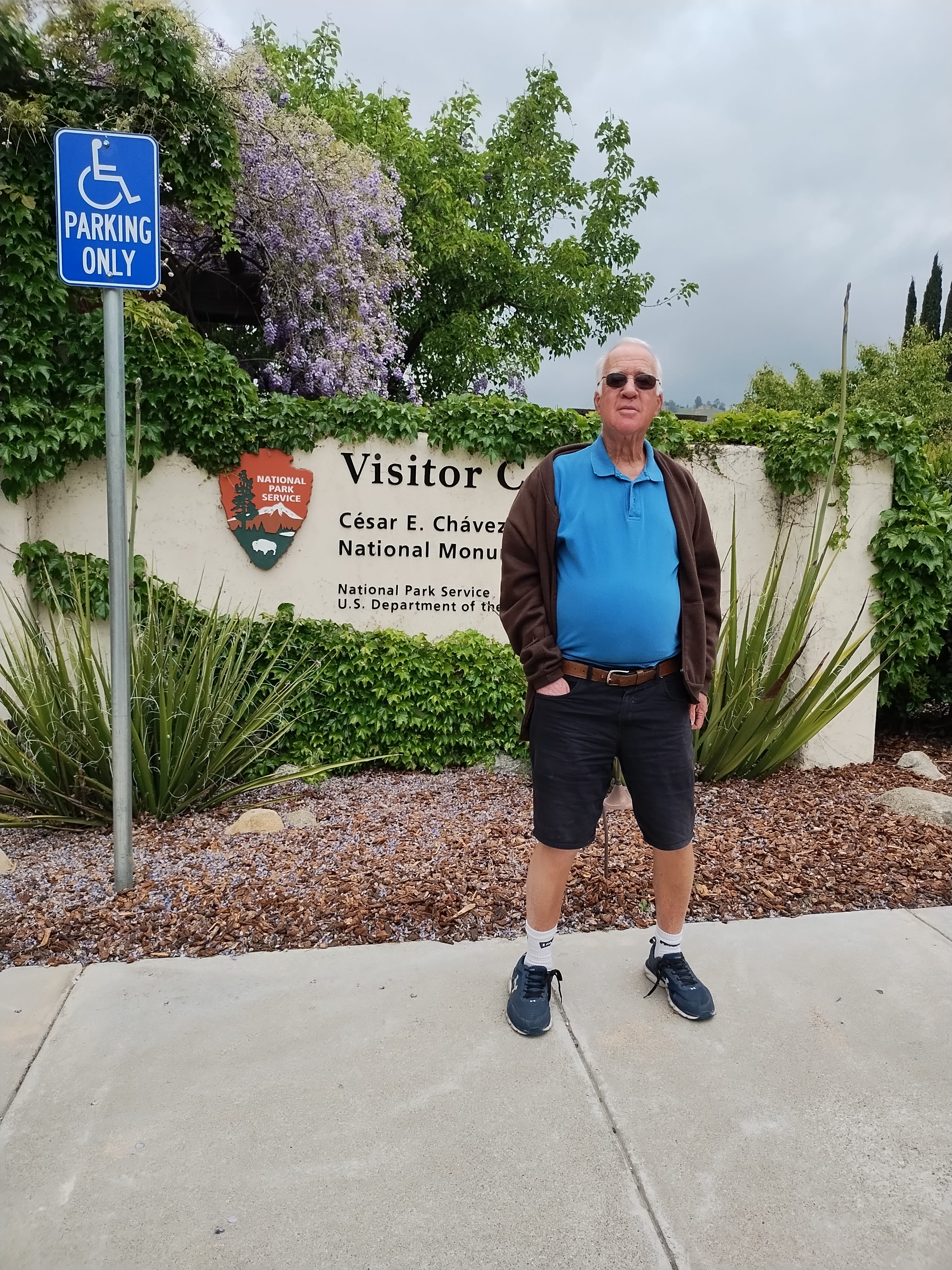
I don’t know what will become of Chavez’s legacy. Arizona Gov. Katie Hobbs decided not to recognize Cesar Chavez Day on what would have been his 99th birthday March 31. The UFW canceled its annual celebration honoring Chavez. The Los Angeles Unified School District renamed March 31 Farmworkers Day. The list will go on and Chavez might face the same fate as Confederate generals whose names have been removed from schools and other buildings in the South.
One woman who rebuffed a sexual advance from Chavez when she was 19 and he was 61 told her mother, a longtime UFW staffer, “Cesar Chavez is just a man,” the New York Times reported.
The New York Times expose shattered the image of a man who had been an icon for decades. The hero has taken a fall.
Interesting piece, Ken. If (and only if) these allegations prove to be false, Chavez' posthumous legacy lies in ruins. Even when those accused of such sexual misconduct are fully and unconditionally cleared, the damage is done. Allegations like these are akin to the use of nuclear weapons; there's no retracting them.
Oh, man. And until this revelation, I was a real fan of Chavez ...